Wednesday, December 12, 2007

Prozac For Your Betta Fish?

I was surprised to see a story about betta fish on the “Advances in Physiology Education” website. It seems male betta fish are “an attractive model for the study of aggressive behavior” and the study finds that in the male Betta splendens given Prozac, that the small dose of Prozac was “sufficient to reduce the expression of specific aggressive behaviors”. Here is the webpage----> http://advan.physiology.org/cgi/content/abstract/31/4/358

Labels: , , ,

Tuesday, October 30, 2007

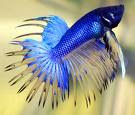
Betta Fish Photo

A photo of a beautiful betta fish


Labels: , , ,

Monday, September 24, 2007

Common Betta Fish Terms

Common fish terms (betta fish and otherwise!)

CRI; Color Rendering Index
A rating used for light bulbs on a scale up to 100, where 100 is equal to sunlight.

Detritus
The organic waste matter that collects on the bottom of your fish tanks.

Fry
A fully formed baby fish.

Pectoral fins
Paired fins, one on each side of the body located behind the gill covers.

Labels: , , ,

Tuesday, August 07, 2007

Why would I want to breed my betta fish?

Most people first start breeding betta fish to see the breeding process themselves and see if they can do it. There are some people who breed betta fish solely to sell them but most got addicted after successfully breed their first batch of betta fry and sell their betta fish to support their habit! You see, a bettas color depends on its parents, so it becomes very addicting trying to match a male betta and a female betta with just the right coloring to complement each other.

If you are looking for an all in one betta fish breeding and care guide that will show you how to have stunning aquariums full of Betta fish that will successful breed, check out "Taking the Mystery Out of Betta Breeding" written by Tho Le. Tho Le has been passionate about Betta fish for over 10 years and has uncovered hundreds of tips, techniques and secrets about Betta fish care and breading that no one else seems to know.

Labels: , , , ,

Thursday, June 28, 2007

Betta Fish Diet

In the wild Betta fish subsist almost exclusively on insects and insect larvae, they even have an upturned mouth that is well suited to snatching any unsuspecting insect that might fall into the water. Internally a bettas digestive system is geared for meat, and for this reason, live foods are the ideal diet for the betta, however they will adapt to eating flake foods and frozen and freeze dried foods. Brine shrimp, Daphnia, tubifex, glassworms and plankton are all excellent options that may be found frozen or freeze dried. If flake food is fed, it should be supplemented with frozen and freeze-dried foods, and when possible live foods.

Labels: , , , , , ,

Thursday, April 26, 2007

Betta Fish Care - Secrets And Techniques

How would you like to learn the secrets to keeping and breeding betta fish? These techniques will give you the most colorful, healthy and active fish you have ever seen.

Just check out this amazing new website for more info:

Betta Fish Secrets

The owner, Mike has just released an incredible new ebook with all his tips and techniques learned over the years in it.

Just by going to the site you can discover the most common reason betta fish become sick with disease and how 90% of the time it comes down to the same thing that can be avoided very easily.

Just make sure you take a look at this site today as he's giving away a free betta fish info gift worth $197 that has taken him months to produce!

Here's the link to the website:

Betta Fish Secrets

Labels: , , , , ,

Friday, March 30, 2007

Beware of These Common Betta Fish Illnesses

Betta fish make fun and beautiful pets, but more than likely your betta fish is going to get sick at some point in time. It is important that you are prepared to treat your betta when he is sick and this includes being aware of various diseases that affect betta fish, their symptoms, and how you can treat them. Once you know the basics of betta fish diseases you will be better prepared to recognize and treat your betta to prevent the disease becoming too serious or even fatal. The following are five of the most common diseases that affect betta fish.

Tail or Fin Rot

Tail rot and fin rot are common betta diseases that are caused by water that becomes too dirty. You can actually prevent this disease from ever affecting your fish if you are careful to always keep their water clean. As a general rule this is an easy condition to treat and it does not seem to be contagious either. If you treat your fish as soon as possible you will be able to stop the progression of the disease and their tails and fins will grow back.

Some of the symptoms to look for include the betta’s tail and fins getting shorter and shorter. Their fins may also start to have a darker color and they may appear as if they are dissolving or actually falling apart. While some betta’s may not even act sick, others may stop eating, get clumped fins, and start looking pale.

Thankfully treating tail and fin rot is fairly easy and will provide results in a few weeks. For treatment you will need to do a full jar water change and use Fungus Eliminator, as well as either tetracycline or Triple Sulfa. After the initial change you will need to be sure to change the water every three days and when you do you should add more medication to the water as well. It is important that you continue the treatment until you fish improves and you seen new fin and tail growth occurring. This may take a few weeks, so continue the treatment until your fish improve.

Ick

Another very common disease in betta fish is ick. Ick is actually a type of parasite and many times it is present in frozen food that is live. Although ick is one of the most contagious betta diseases, it can be treated. You can prevent your fish from getting ick by adding Aquarisol and salt to your fish’s water.

If you start to see white dots appearing on your betta’s body, including the head and even his eyes, this is a sign that your fish has ick. More than likely your beta will also become much less active than before and may appear sick and have clumped fins as well. They may feel itchy, so you may see them darting and rubbing against rocks in their tanks.

Since ick is such a contagious disease it is best to go ahead and treat the entire tank of fish for disease. Ick is very sensitive to temperature, so you should raise the temperature in your tank to about 85 degrees F. For every gallon in your tank, add one drop of Aquarisol every single day until your fish are better. Usually it will only take a few days to get rid of this disease.

Dropsy

Dropsy is actually the most common disease among bettas and it is also the most likely to be fatal to your fish as well. While not a great deal is known about this disease many feel that it is linked to live foods, and it especially seems linked to feeding them the black worms. Many people have found that they can prevent dropsy all together by not allowing their fish to eat black worms.

The symptoms of dropsy are quite easy to recognize and they include a bloated belly and scales that appear as if they are raised. The raised scales may actually appear very similar to a pine cone.

Unfortunately there is not a known cure for this betta fish disease. It is, however, very important that you isolate the betta that appears to have dropsy as soon as possible so the other fish will not contract the disease.

Swim Bladder Disorder

Another very common disease that betta’s may get is swim bladder disorder. This actually comes as a result from feeding them too much. This disease is not contagious, and as a general rule it affects the younger bettas if they have eaten to much or have become very stressed.
If you see a betta that is having a hard time swimming, seems off balance, or prefers to just lay near the bottom, there is a good chance they are suffering from swim bladder disorder. Many times you will see them just sliding along on the bottom of the tank as well.

Many times you will find that your betta will recover by himself, but it is probably a good idea to not feed them as much for a few days. It is also helpful to eliminate brine shrimp from their diet as well, as this can actually cause part of the problem. In the future, try to be sure that you feed your fish a balanced diet to prevent this from happening again.

These are just a few of the common betta fish diseases that you my deal with in your bettas. Other diseases that bettas may have to deal with include external parasites, bacterial infection, fungal infection, depression, and velvet. Having medications on hand such as tetracyclin, Ampicillin, jungle fungus eliminator, and maracin 1 and 2. Just taking some simple preventive measures can help keep your fish from developing many of these diseases, but it important to know what to do if these diseases occur in your fish.

For more information on betta fish illness, try visiting http://www.bettafishcenter.com, a popular website that provides tips, advice and resources on caring for betta splendens.

Article Source: http://EzineArticles.com/?expert=Sarah_Munn

Labels: , , ,

Friday, February 23, 2007

Betta Fish Care - Aquarium Heaters

While it can be difficult to maintain the water temperature in a tank, it's absolutely necessary that you have one. There are two reasons for this. First of all, if your Betta gets too stressed out over a period of time, his immune system will become compromised, and he'll begin to lose his ability to fight off infection and disease.

The second reason is that your Betta is used to living in water that is between 75 and 80 degrees Fahrenheit - and he will become listless and unresponsive if the water is too far above or too far below that temperature. This becomes even more important in a large tank.

It's also very important that you maintain a fairly consistent temperature in your Betta fish's tank. Your fish won't handle extreme temperature changes either. By the way, it doesn't take much of a water temperature change - just the matter of a couple of degrees Fahrenheit - for your Betta to be affected - so this is something you really need to pay attention to.

The unit of measurement for aquarium heaters is in watts. When trying to decide on which heater will be best for you, a good basic guideline is 5 watts per gallon of water. Make sure that the heater fits your tank and, if it's an internal one, can be properly inserted.

If you're not sure and you didn't buy the tank and heater together, take the tank with you to the store, and ask the manager to help you get the right one. Two Types of Heating Systems: There are two main types of heating systems - internal and external. You'll have to decide which one works best for you - and if you have any questions, ask your local pet store or your Betta breeder for recommendations based on your tank set up.

One other important thing to keep in mind is the water circulation - without proper water circulation, you're going to have "hot spots" and "cold spots" in the water, both of which can be harmful to your Betta fish.

Heaters cost anywhere from about $20 to $50, although like with anything else, you can find more expensive models. Internal Tank Heating Systems: Internal heating systems are the most common. They usually consist of a glass tube anywhere between 4 inches (10.16 cm) to 12 inches (30.48 cm) long. Some offer a built-in thermostat, while others will have an external thermostat, usually outside the tank and are usually used to control multiple heating units. External Tank Heating Systems: There are several different models of external heating systems, such as a model which fits under the tank and heats the water from below, or one that connects to the filtering system. They are widely available both online and off.


About the Author
Mike owns Betta Fish Expert which helps people learn about betta fish

Labels: , , , , ,